What Actually Drives Quality, Stability, and Consistency
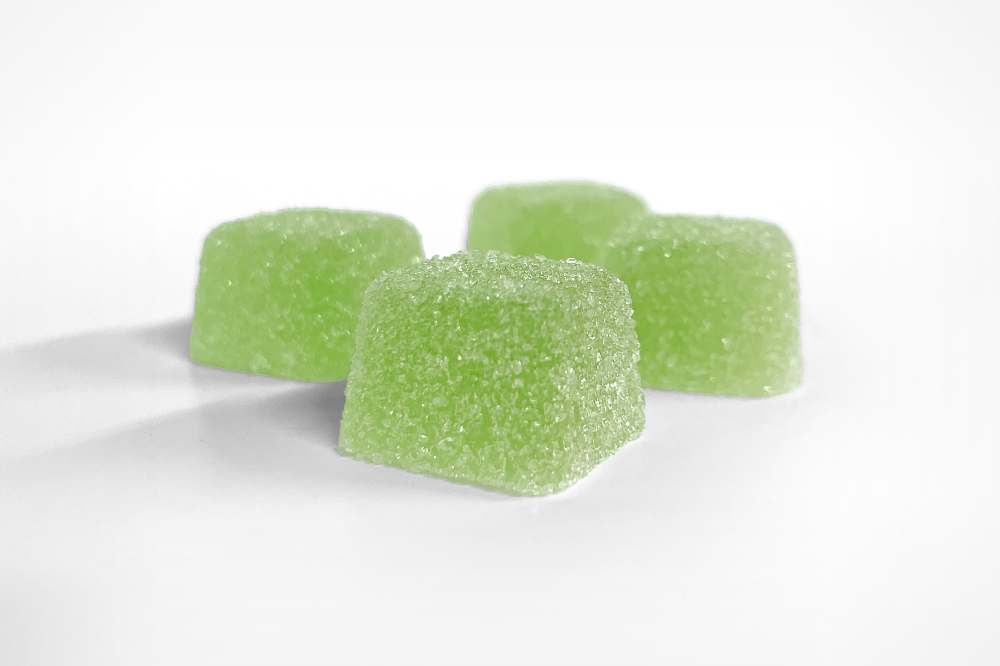
Walk down the candy aisle or browse cannabis edibles and most gummies look the same at a glance. But behind the scenes, one formulation decision has a major impact on how a product performs: Pectin or gelatin. At first, it sounds like an ingredient choice. In reality, it’s a systems decision that affects stability, dosing, shelf life, and overall product quality. Because in cannabis, a gummy isn’t just candy. It’s part of a delivery system.
Pectin vs. Gelatin: What’s the Difference?
Both pectin and gelatin are used to create the familiar chew of a gummy, but they behave very differently. In traditional candy, these differences mostly affect texture. In cannabis edibles, they directly impact how cannabinoids are distributed, maintained, and delivered over time.
Gelatin
- Animal-derived protein (collagen-based)
- Forms structure as it cools
- Flexible, elastic texture
- More forgiving during production
Pectin
- Plant-derived (typically from citrus or apple)
- Forms a gel through pH, sugar, and temperature control
- Softer, cleaner bite
- Highly repeatable when executed correctly
Why Many Modern Brands Are Moving Toward Pectin
Pectin has become increasingly popular, especially among brands focused on quality and consistency.
- Cleaner, More Fruit-Forward Experience: Pectin allows flavors to come through more clearly, creating a brighter, more natural taste profile.
- More Refined Texture: Compared to gelatin’s elastic chew, pectin is often associated with more premium products and delivers a softer bite, less “rubbery” feel, and a cleaner finish.
- Plant-Based Formulation: Pectin is naturally vegan and aligns with increasing consumer demand for plant-based ingredients and transparency.
- Improved Structural Stability: Pectin-based gummies tend to hold their shape better under typical storage and shipping conditions, helping maintain product consistency.
The Reality: Pectin Is Much Harder to Execute
Pectin is not inherently superior because it’s plant-based. It’s powerful because it is precise. Unlike gelatin, which sets as it cools, pectin requires multiple variables to align at the same time:
- pH
- Sugar concentration
- Temperature
- Cook timing
- Deposit timing
This creates a narrow operating window during production. If those variables drift, issues can show up quickly:
- Sticky or sweating gummies
- Inconsistent texture
- Structural instability
- Reduced shelf life
This is one of the main reasons many manufacturers continue to rely on gelatin. Pectin rewards control, but it punishes inconsistency.
In Cannabis Edibles, the Gummy Is the Delivery System
This is where the conversation changes. Cannabinoids like THC and CBD are oil-based compounds. Most gummy systems are primarily water-based. To bridge that gap, cannabinoids are typically introduced through emulsions, where oil droplets are dispersed in water.
At that point, the gummy matrix becomes critical. It determines whether cannabinoids remain:
- Evenly distributed
- Physically stable
- Consistent from unit to unit
A poorly structured system can lead to:
- Potency variation
- Ingredient migration
- Reduced shelf stability
Why Pectin Works Well in Infused Systems
When properly engineered, pectin creates a uniform, tightly controlled gel network. That structure helps stabilize the surrounding system by limiting movement within the matrix. In an emulsion-based gummy, this supports:
- Consistent droplet distribution
- Reduced migration over time
- More reliable dosing across units
This is where formulation becomes more than ingredients. It becomes system alignment: Emulsion design + matrix structure working together to maintain consistency over time
What Actually Determines Product Quality
The biggest misconception in this conversation: The gelling agent alone does not determine success. Execution does. High-performing products can be made with both pectin and gelatin. Poorly controlled products can fail with both. What matters is the level of control behind the system. Without these factors aligned, even a well-formulated gummy will drift:
- Water activity management
- Thermal exposure limits
- Drying conditions and consistency
- Stability testing over time
- Packaging compatibility
Why Superior Molecular Formulates with Pectin
At Superior Molecular, we don’t approach gummies as standalone products. We approach them as integrated systems. From emulsion design → to matrix structure → to final performance, every layer is engineered to work together. We choose pectin because it supports that approach. When properly executed, it allows for:
- Greater control over structure and repeatability
- Strong compatibility with water-based emulsions
- Improved stability across real-world conditions
- A more consistent consumer experience
But more importantly, it aligns with how we build products: Precise. Controlled. Reliable.
Final Thought
Pectin vs. gelatin is a useful starting point. But in cannabis edibles, performance isn’t decided by a single ingredient. It’s built through precision, process control, and system-level thinking. That’s what separates products that look good at launch from products that perform consistently over time.
Developing an infused product or improving consistency?
At Superior Molecular, we specialize in:
- Water-dispersible cannabinoid emulsions
- Pectin-based gummy formulation
- Scalable, controlled manufacturing systems
Connect with our team to explore formulation, white-label, or custom development options.